
By Sue
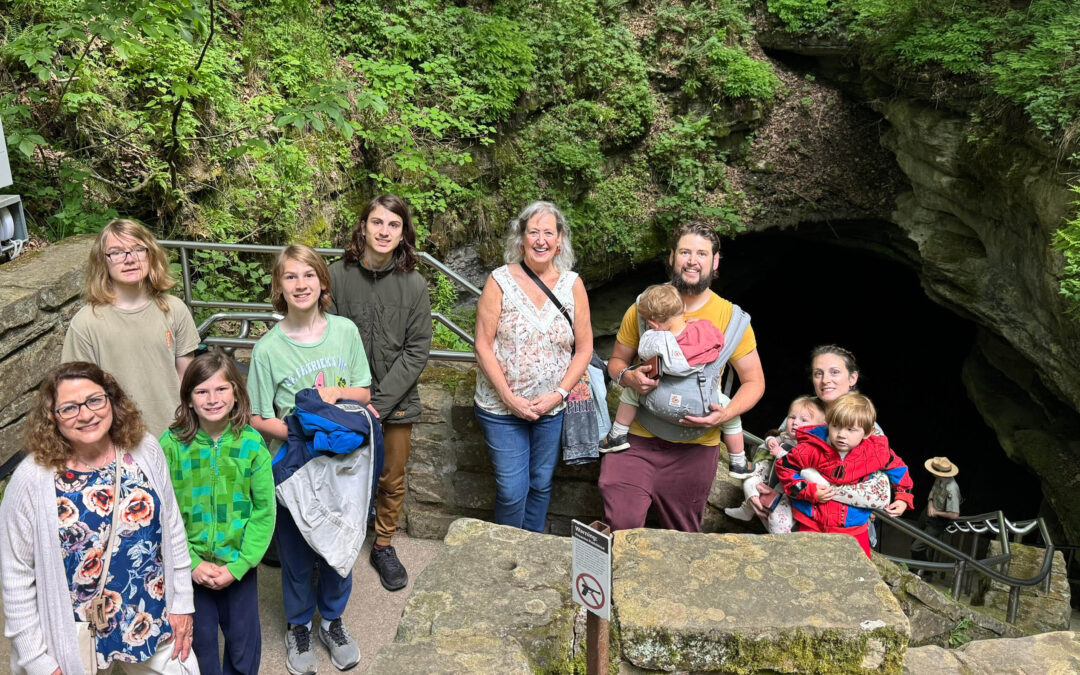
In May, I visited my son and his family in Vine Grove, Kentucky, near Fort Knox, where my daughter-in-law is serving in the Army. They moved there last fall, so I finally had the chance to see their new home, spend time with them, and explore the area a little. And when I say “explore,” I mean thrift stores, antique stores, little local shops, and checking out nearby sights.
One of the places we visited was Mammoth Cave National Park. Over the years, I’ve driven by Mammoth Cave several times during my travels but had never stopped to see it. This trip finally gave me the opportunity. We originally planned to take the Historic Tour, which is considered the classic “first-time visitor” tour. It combines huge cathedral-like rooms, winding passageways, cave history, Native American history, and landmarks that made Mammoth Cave world famous. The tour is considered moderate to strenuous. It lasts about two hours, covers roughly two miles, and includes hundreds of stairs, steep inclines, and narrow sections with names like “Fat Man’s Misery” and “Tall Man’s Agony.”
Fat Man’s Misery is a twisting, keyhole-shaped passage where adults often have to turn sideways to get through. Tall Man’s Agony comes immediately afterward and requires visitors to squat and “duck walk” because the ceiling is so low. I recently had surgery and still have some pretty significant restrictions, so when I heard the ranger describe those areas, I decided it was wiser to switch to the less strenuous self-guided tour. I didn’t want to risk undoing my recent surgical repair. And honestly, I’m glad things worked out the way they did.
At first, I assumed Mammoth Cave got its name because the cave system is absolutely massive. After all, Mammoth Cave has more than 400 miles of mapped and connected passageways, with experts believing there could be another 600 miles still undiscovered. It truly is enormous. But on our drive there, we passed attractions like Dinosaur World, with giant dinosaur replicas and fossil digs, and it got me wondering whether Mammoth Cave had been named after woolly mammoths like Mammoth National Monument in Waco, Texas.
It turns out it wasn’t. The cave was named “Mammoth” simply because of its immense size.
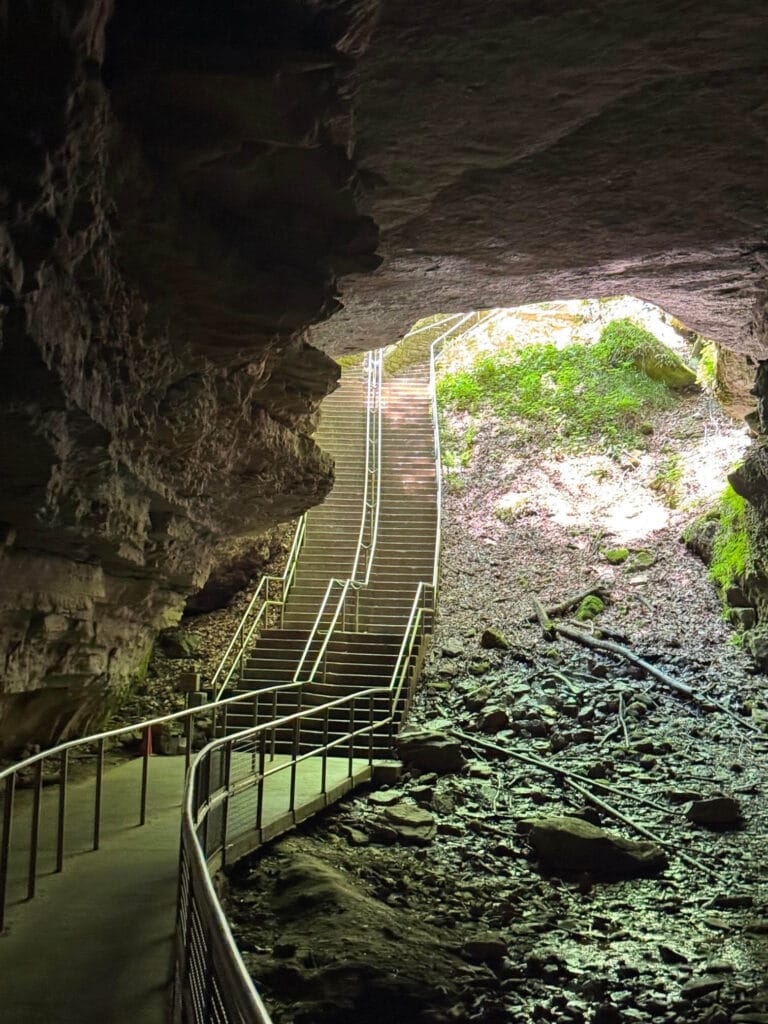
When I first began the 60-step descent into the cave, I was amazed by how quickly the temperature changed. It was a balmy 81 degrees outside, but within moments it felt like I had stepped into powerful air conditioning. A cool breeze rushed outward from the cave entrance. The cave stays about 54 degrees year-round, and when it’s hot outside, warmer air pulls that cold cave air outward, creating the breeze visitors feel. In winter, the airflow reverses. Even the air inside the cave fascinated me.
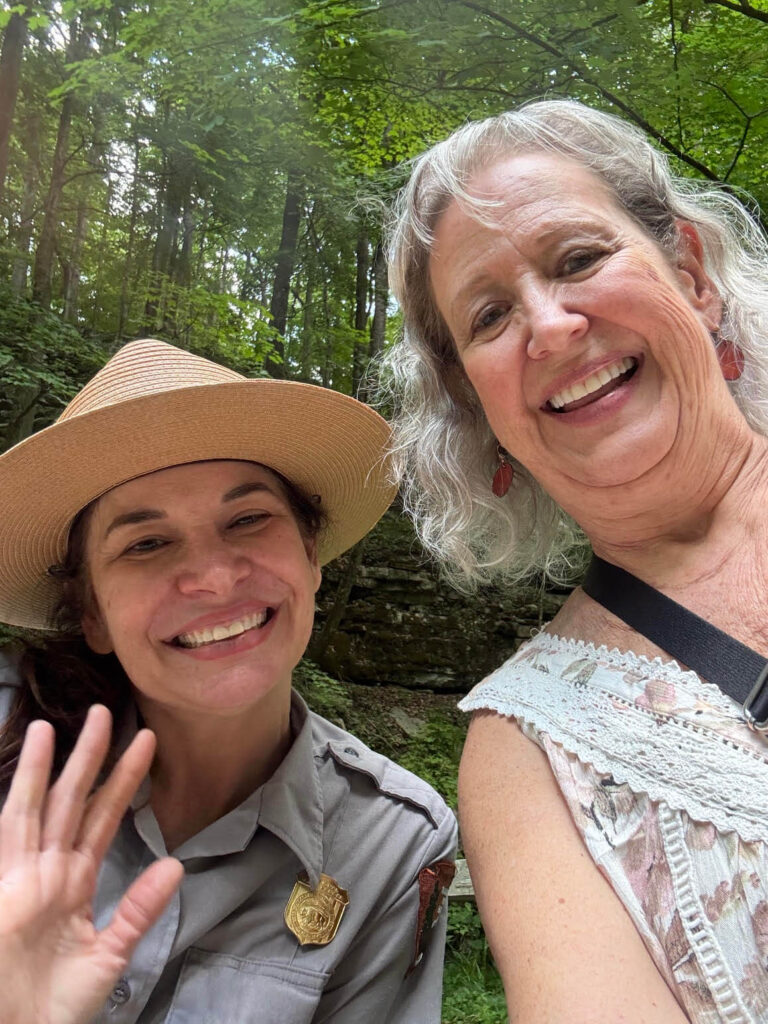
The first section of the cave leads into a large open room where I met a ranger named Kenna, who shared some fascinating history about Mammoth Cave and its role during the War of 1812. Right there inside the cave were remnants from old saltpeter mining operations. Saltpeter was essential for making gunpowder, and during the War of 1812, the United States desperately needed it. The cave floor contained nitrates created from thousands of years of bat guano buildup. Workers mined the cave soil, washed and strained it in large vats, then combined it with potassium from vegetables like potatoes to create potassium nitrate — one of the key ingredients in gunpowder.
It amazes me that people at that time understood how to use the resources around them to create exactly what they needed. Human beings have always been intelligent, resourceful, and creative.
And Mammoth Cave played an important role in helping America defend itself during that war. That history started connecting dots in my mind. The United States became a country in 1776, so in 1812 it was still a very young nation — only 36 years old. For some reason, standing there inside that cave made me suddenly realize something I had never emotionally connected to before: The British were still trying to take America back.
I’ve read about the War of 1812 many times in history books, but reading words on a page never affects me the same way as physically standing in a place where history actually happened. And this year, as our country approaches the 250th anniversary of American independence, it struck me even more deeply how significant that war really was. Had the United States lost the War of 1812, we might not even be celebrating 250 years of independence at all. Standing inside Mammoth Cave suddenly made history feel real to me in a way it never had before.
And honestly, that’s what I love about travel. Travel makes me think. It makes me curious. It helps me connect dots I never would have connected otherwise. Travel brings surprises into my life — both little and big. And travel gets me out into the world meeting new people and learning about their beliefs, customs, families, and history. I’ve traveled enough now that when I return somewhere, there is often a friend I can reconnect with.